5 Simple Ways to Teach Hindu Values to Kids Growing Up in the USA

Somewhere between soccer practice, school projects, and a packed weekend, it happens without anyone deciding it should: an Indian family in the US goes months without really talking about why they do the things they do.
Not the big stuff — everyone remembers Diwali, everyone shows up for a wedding. It’s the smaller, everyday values that quietly slip through the cracks. Why we touch our parents’ feet. Why we don’t waste food. Why patience matters more than winning. These aren’t things you can schedule once a year. They’re things kids absorb from repetition, or they don’t absorb them at all.
The good news is that teaching Hindu values to a child growing up in America doesn’t require a dramatic overhaul of your family’s routine. It just needs a few intentional habits. Here are five that actually work.
1. Turn Car Rides Into Story Time
American kids spend a surprising amount of time in the car — school drop-offs, sports practice, weekend errands. That time is free real estate.
Instead of screen time or silence, use ten minutes to tell one story: Krishna and the butter, Hanuman crossing the ocean, Ganesha and the moon. Kids don’t need the full Mahabharata in one sitting. One short story, told with a little drama in your voice, does more than a textbook ever could.
The trick is consistency, not length. A five-minute story once a week beats one long lecture once a year. So, bring that into practice and it becomes a lifetime lesson for your child.
2. Explain the “Why,” Not Just the “What”
Kids in the US are constantly asked to explain themselves — “why can’t I have that,” “why do we have to,” “why is this different.” Indian traditions often get taught as rules: touch your elders’ feet, don’t eat before puja, always share food with guests. Without the “why,” these start to feel arbitrary, and arbitrary rules are the first thing kids drop once nobody’s watching.
Try flipping it. Instead of “we always do this,” say “we do this because it teaches us respect for people who came before us” or “sharing food is how we say a guest is family, even for a day.” A rule with a reason survives; a rule without one usually doesn’t survive middle school.
Even a small explanation to it can bring a lot of clarification in the child’s mind and they start following it automatically. So, instead of making it a “What” rule, make it a “Why” rule – “Children are more intelligent than we think they are”.
3. Make Shlokas a Habit, Not a Test
If your child can memorize the entire alphabet song and every Pokémon’s name, they can absolutely learn a shloka. The problem is usually how it’s taught — as an exam to pass, rather than something to enjoy.
Start with one line. Say it together every morning before school, or every night before bed, for a week. Don’t correct pronunciation too aggressively at first — let it become familiar before it becomes perfect. A child who enjoys saying a shloka will ask to learn the next one. A child who’s been corrected five times in a row usually won’t.
Lot of times, we want our children to learn the shlokas just because we want them to learn as we know they are good. But that’s not enough. Don’t make it like a forceful work, instead make it like a game or something that they can enjoy doing. Like telling them – “Let’s see who says this first” and say a small shloka, like – “Om Namah Shivay”. Children love playing, so they will instantly want to win the race 😊. So, it’s all about how you introduce the shlokas in their life.
4. Connect Values to Their Actual Life
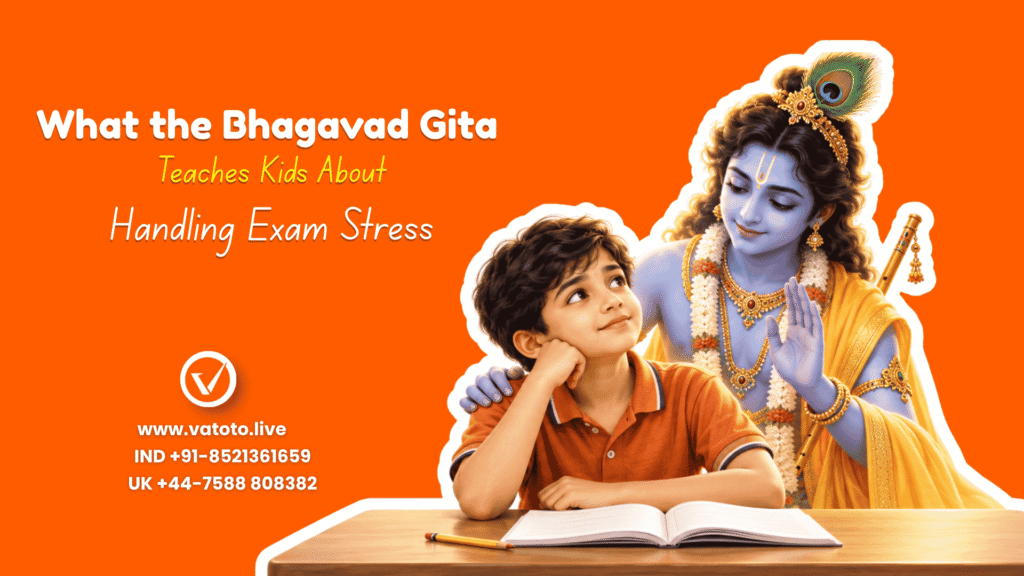
The Bhagavad Gita’s teachings on effort over outcome sound abstract to an adult, let alone a ten-year-old. But reframe it around something a kid actually faces — a spelling test, a soccer match they didn’t win, a friend group drama — and it clicks immediately.
“Krishna told Arjuna to focus on doing his best, not on whether he’d win” is a sentence that makes sense to a child who just lost a match and is upset about it. Values stop feeling like ancient history the moment they solve a problem a kid has today.
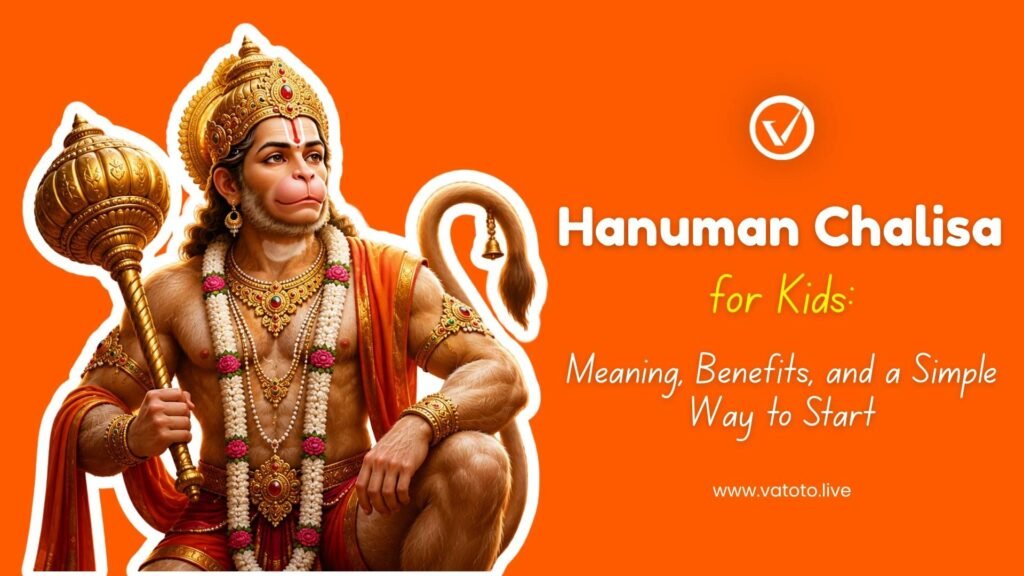
So, when a kid goes through any small or big emotional phase or has a curious question, relate it to what Krishna says and what Hanuman Ji says. For example, remind them how Hanuman Ji had forgotten about his strength but then when he remembered, he could very easily cross even a vast ocean, which was impossible for anyone to cross at that time.
5. Let Them See You Do It, Not Just Say It
This one’s the quiet, uncomfortable truth: kids notice when values are talked about but not lived. If patience is a value you’re teaching, and you’re visibly impatient in traffic every single day, the lesson your child actually learns is the traffic one.
You don’t need to be perfect. But narrating your own effort — “I’m trying to be patient right now, it’s hard” — teaches more than most explanations ever could, because it shows the value is real, not just a lesson for kids.
So, “Practice Before You Preach”. Before you want your child to follow the good rules and be a good human being in life, show them those qualities in yourself first. Always remember children only follow those things that they see around them happening all the time.
It Doesn’t Have to Be All on You
Here’s the part most parents don’t say out loud: doing all five of these consistently, on top of everything else raising a child in the US already demands, is a lot. Even when you want your child to be able to become a person with good values, it’s very tough to make that happen all alone – It’s okay to want backup.
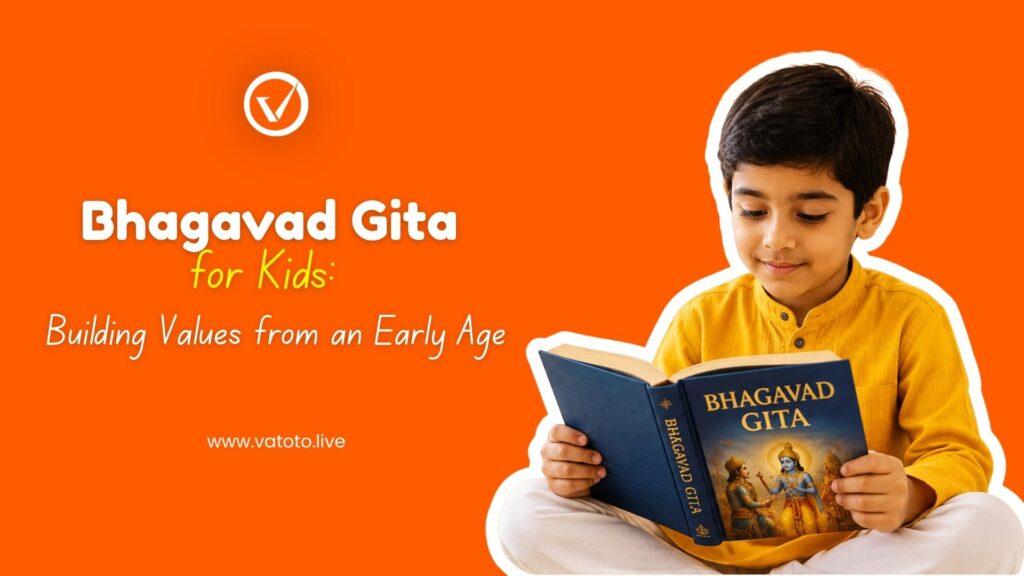
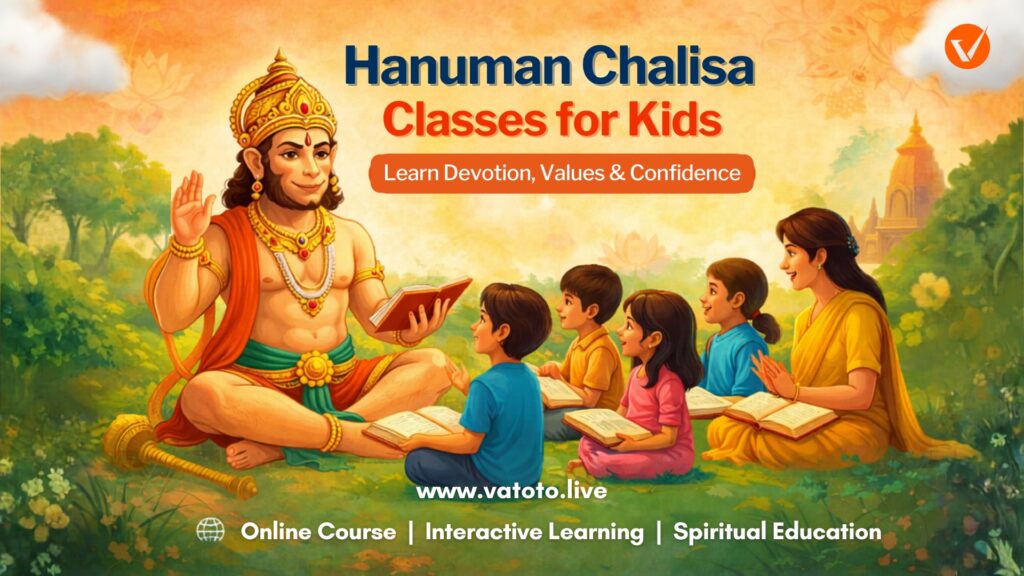
This is exactly why we built Vatoto.live — live, teacher-led online classes in Bhagavad Gita and Hanuman Chalisa for kids ages 4–16, designed for exactly this gap. A teacher tells the stories, explains the “why,” and makes the shlokas fun to say — so it’s not entirely on you to be the storyteller, the Sanskrit teacher, and the values coach every single day. We are here to, together, raise a child who is the bright future of this whole world, not just of one single country. So, while you are still busy, your children will still get those same values which yours and mine grandparents and other relatives gave us, when we were growing up.
Want to see what a class looks like?
Book a free demo class — no cost, no obligation.