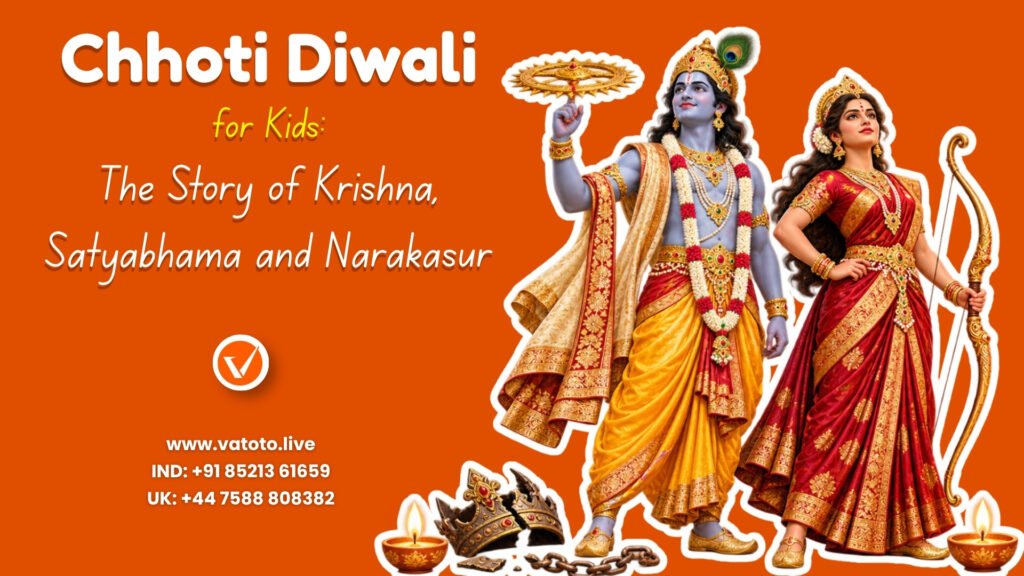
Chhoti Diwali for Kids: The Story of Krishna, Satyabhama and Narakasur
On the night before Diwali, homes begin to glow. Diyas appear near doorways, sweets fill the kitchen, new clothes are laid out, and children can almost feel the celebration waiting to begin.
But why is this smaller celebration called Chhoti Diwali? And what does it have to do with Shri Krishna, Satyabhama and a powerful ruler named Narakasur?
Behind the early morning bath, the first festive lamps and the preparations for Diwali lies a dramatic story about power, pride, courage and freedom. It is the story of a ruler who allowed strength to turn into cruelty—and of those who refused to let his actions continue.
This guide to Chhoti Diwali for kids tells that story in a warm and engaging way while exploring the meaning of Narak Chaturdashi, its traditions across India and the values children can carry beyond the festival.
What Is Chhoti Diwali?
Chhoti Diwali is observed during the Diwali festival and is traditionally associated with the fourteenth lunar day, or Chaturdashi, of the Krishna Paksha in the Hindu month of Kartik.
The festival is known by several names:
- Narak Chaturdashi
- Chhoti Diwali
- Kali Chaudas
- Roop Chaudas
- Roop Chaturdashi
- Naraka Chaturdasi
The names and customs differ from one region to another. In many North Indian homes, it is called Chhoti Diwali and is observed as the day before the main Diwali celebration. In Maharashtra, the early morning Abhyang Snan, or ceremonial oil bath, is an important tradition. In several South Indian communities, Narak Chaturdashi is celebrated as the main Deepavali morning.
The festival remembers the defeat of Narakasur and the freedom of those who had suffered under his rule. At its heart is a simple but powerful message: darkness may appear strong, but it cannot last when courage and righteousness rise against it.
Why Is It Called Narak Chaturdashi?
The word Narak in the festival’s name is connected with Narakasur, the powerful ruler defeated by Shri Krishna.
Chaturdashi means the fourteenth lunar day.
For children, however, the word narak can carry another useful meaning. It can represent any situation created by cruelty, fear, greed or uncontrolled pride. Narakasur created suffering through his choices. His defeat therefore represents more than the end of one ruler—it symbolises freedom from fear and the removal of destructive behaviour.
This is why Narak Chaturdashi is closely connected with light, cleansing and a fresh beginning.
Who Was Narakasur?
Narakasur, also known as Bhaumasur, was traditionally described as the son of Bhumi Devi, the Earth Goddess.
He was not believed to have begun life as a cruel person. He possessed great strength, intelligence and the potential to become a capable ruler. In some traditions, he was blessed with extraordinary powers and protection.
But power changed him.
As Narakasur became stronger, pride began to guide his decisions. He stopped seeing his abilities as a responsibility and began using them to control others. He conquered kingdoms, challenged the devas and took precious objects that did not belong to him.
Among the treasures he seized were the divine earrings of Aditi, the mother of the devas.
Even worse, Narakasur imprisoned thousands of women from different kingdoms. Their freedom, dignity and choices were taken away simply because he believed no one was powerful enough to stop him.
This is where the Narak Chaturdashi story becomes especially meaningful. Narakasur’s greatest weakness was not a lack of strength. It was the belief that strength gave him the right to do whatever he wanted.
A Cry for Help Reaches Shri Krishna
As Narakasur’s actions grew more destructive, the devas and those affected by his rule sought Shri Krishna’s help.
Shri Krishna understood that this was not a struggle for territory or personal victory. People were being harmed, sacred objects had been stolen and many innocent lives remained trapped under Narakasur’s control.
The time had come to act.
Satyabhama accompanied Shri Krishna as he travelled toward Narakasur’s heavily protected kingdom of Pragjyotisha. They rode on Garuda, the mighty divine bird associated with Bhagwan Vishnu.
The city was not easy to enter. It was surrounded by powerful defences, barriers and warriors prepared to protect Narakasur’s rule. But Shri Krishna broke through the fortifications and faced the forces guarding the kingdom.
One of Narakasur’s strongest defenders was the warrior Mura. Shri Krishna defeated him and continued forward.
At last, the battle reached Narakasur himself.
The Courage of Satyabhama
Satyabhama is sometimes treated as a background character in short retellings, but her presence in this story is important.
She did not remain safely behind while Shri Krishna went into danger. She accompanied him to the battlefield and stood beside him as they confronted Narakasur.
Different traditions describe the final part of the battle in different ways.
In the account found in the Bhagavata Purana, Shri Krishna defeats Narakasur while Satyabhama accompanies him on the journey and later events.
In another popular tradition, especially loved in parts of South India and Maharashtra, Narakasur had received protection that he could be defeated only by his mother. Since Satyabhama is associated with Bhumi Devi, she was able to overcome the protection and strike the decisive blow.
In this version, Narakasur believes that no mother would ever raise a weapon against her own child. He mistakes a mother’s love for permission to continue causing harm.
Satyabhama’s action carries a deeper idea: love does not mean allowing someone to hurt others without consequence. Sometimes love must be firm enough to stop wrongdoing.
Both versions honour the victory of righteousness over cruelty. They also remind children that courage is not limited by gender. Satyabhama is remembered as someone who entered the struggle, faced danger and stood firmly on the side of justice.
The Defeat of Narakasur
Despite his armies, fortifications and immense power, Narakasur was defeated.
The ruler who believed himself unstoppable discovered that strength without goodness could not protect him forever. The treasures he had taken were recovered, and those he had held captive were finally freed.
This was the real victory.
The end of the battle mattered, but the restoration of freedom mattered even more. People who had lived under fear could step into the light again. Those who had been denied a voice could begin rebuilding their lives.
That is why the festival is not remembered as a celebration of violence. It is remembered as a celebration of liberation—the moment oppression ended and freedom returned.
According to one popular tradition, Narakasur understood his mistakes at the end of his life and asked that the day of his defeat be remembered with lamps and happiness rather than hatred.
Whether children hear this particular detail or not, the festival offers a thoughtful message: a person’s wrong actions should never be celebrated, but the end of suffering should be.
The Government of India’s tourism guide to Narak Chaturdashi and the defeat of Narakasur also describes how the story represents the victory of good over evil and light over darkness.
Why Are Diyas Lit on Chhoti Diwali?
A diya may be small, but it changes everything around it.
Before the flame is lit, a dark room can feel uncertain. Once the diya begins to glow, shapes become visible, fear becomes smaller and people can see where they are going.
This is why light is such an important part of Chhoti Diwali and the larger Diwali celebration.
The darkness represented by Narakasur was not simply the darkness of night. It was the darkness created by pride, greed, fear and the misuse of power.
The diya represents their opposite:
| Darkness to leave behind | Light to strengthen |
|---|---|
| Pride | Humility |
| Fear | Courage |
| Greed | Gratitude |
| Cruelty | Kindness |
| Carelessness | Responsibility |
| Anger without control | Calm thinking |
| Misuse of strength | Strength used to protect |
| Silence in the face of wrong | Speaking up wisely |
A child does not have to defeat a demon or enter a battlefield to bring light into the world. Telling the truth, including someone who feels left out, apologising after a mistake and protecting a person being treated unfairly are also ways of choosing light.
Why Is an Early Morning Oil Bath Taken?
In many families, Narak Chaturdashi begins before sunrise with an oil bath called Abhyang Snan.
Traditionally, oil is massaged into the body before bathing. In some homes, a fragrant herbal paste called ubtan is also applied. Family members then bathe, wear fresh clothes, offer prayers and begin the day with sweets and festive food.
The bath represents more than physical cleanliness. It symbolises removing heaviness, negativity and old habits before welcoming the light of Diwali.
Children can understand it as a fresh-start ritual:
“Just as we wash away dirt from the body, we can also try to clear anger, laziness and unkind behaviour from our actions.”
The bath should not be presented as something magical that instantly changes a person. Its value lies in the intention behind it—a pause to begin again with a cleaner body, a calmer mind and better choices.
Chhoti Diwali Traditions Across India
There is no single way in which every family celebrates Chhoti Diwali. India’s regional traditions give the festival many beautiful forms.
| Region or tradition | Common observance |
|---|---|
| North India | Known as Chhoti Diwali or Narak Chaudas; homes are cleaned and diyas are lit in preparation for the main Diwali celebration |
| Maharashtra | Families often take an early morning Abhyang Snan, wear new clothes and share festive foods |
| Tamil Nadu and Karnataka | Narak Chaturdashi is an important Deepavali morning associated with Shri Krishna’s victory over Narakasur |
| Goa | Communities create large Narakasur effigies that are displayed and burnt before dawn |
| Gujarat | The night may be observed as Kali Chaudas, with traditions connected to protection and the removal of negative influences |
| West Bengal and some eastern regions | The period is closely connected with Kali Puja traditions |
| Families living abroad | Celebrations may include diyas, a short family prayer, storytelling, sweets and video calls with grandparents |
These differences are not contradictions that children must solve. They show how one festival can travel across places and generations while keeping its central message alive.
What Can Children Learn From Narakasur’s Story?
The story contains exciting characters and a dramatic battle, but its most valuable lessons appear in the choices people make.
Power Does Not Decide What Is Right
Narakasur was powerful, but power did not make his actions right. Children encounter smaller versions of this situation at school or during play. Being older, louder, stronger or more popular does not give anyone the right to control or hurt another person.
Courage Can Be Shared
Shri Krishna did not travel alone. Satyabhama accompanied him, and Garuda carried them into danger. The victory reminds children that asking for help and working together do not make a person less brave.
Freedom Matters
The people imprisoned by Narakasur were not possessions to be claimed. Their release is one of the most important parts of the story. It can begin a simple conversation about respecting another person’s dignity, boundaries and choices.
Pride Can Hide the Truth
Narakasur’s pride convinced him that no one could challenge him. Pride becomes dangerous when it prevents a person from listening, apologising or recognising the harm they have caused.
Strength Should Protect
Shri Krishna and Satyabhama used their abilities to stop suffering and restore freedom. Their example turns strength into responsibility.
A Fresh Beginning Is Possible
Narak Chaturdashi comes just before the great light of Diwali. Symbolically, the old darkness is cleared before a brighter beginning arrives.
These ideas connect naturally with values-based learning for children, where cultural stories help children think about decisions they face in real life.
Making the Festival Meaningful at Home
Chhoti Diwali does not require a long ceremony to become memorable. A few thoughtful moments can help children connect with its meaning.
Light a “Courage Diya”
Before lighting a diya, each family member can name one situation in which they would like to act with greater courage.
A child might say:
- “I want to speak when someone is being left out.”
- “I want to admit when I make a mistake.”
- “I want to try again when something feels difficult.”
The diya then becomes connected with a real intention rather than remaining only a decoration.
Clear One Inner Darkness
Ask each person to choose one habit they would like to reduce—anger, complaining, jealousy, laziness or speaking unkindly.
Keep the conversation gentle. The purpose is not to shame anyone but to recognise that everyone has something they can improve.
Retell the Story From Satyabhama’s View
Instead of only asking children to repeat what happened, invite them to imagine what Satyabhama may have thought as she travelled toward the battlefield.
Was she afraid? Why did she still go? What might courage have meant to her?
This helps children see her as an active participant rather than simply someone standing beside the hero.
Create a Light-Over-Darkness Rangoli
Divide a small rangoli design into two parts. Use darker colours on one side for fear, greed or anger and bright colours on the other for courage, gratitude and kindness.
It can become a visual representation of the festival’s meaning.
Begin the Day With Gratitude
After bathing and wearing fresh clothes, each family member can name one thing for which they are thankful.
Gratitude prevents the festival from becoming only about new clothes, sweets and decorations.
A Note for Parents Sharing the Story
Children may ask why a festival celebrates the defeat of someone.
A helpful answer is:
“The festival does not celebrate someone’s pain. It celebrates the end of the harm he was causing and the freedom of the people he had trapped.”
They may also ask whether Shri Krishna or Satyabhama defeated Narakasur.
Rather than choosing one version and dismissing the other, explain that India’s ancient stories have travelled through many regions and languages. Some texts place Shri Krishna at the centre of the final victory, while popular regional traditions give Satyabhama the decisive role.
The shared meaning is clear: Shri Krishna and Satyabhama stood together against injustice, Narakasur’s harmful rule ended, and those he had imprisoned were freed.
This answer respects both scriptural accounts and living family traditions.
Chhoti Diwali for Children Growing Up Abroad
Children growing up in the USA, UK, Canada, Australia, the UAE or elsewhere may see decorations for Diwali without hearing much about Narak Chaturdashi.
A short explanation can help them speak about the festival confidently:
“Chhoti Diwali is connected with the story of Shri Krishna, Satyabhama and Narakasur. It celebrates the end of cruelty, the freedom of those who were trapped and the victory of light over darkness.”
A child does not need to memorise every name or regional custom. Understanding the heart of the story is more valuable than repeating a perfect definition.
Stories like this can also help families keep children connected with Indian culture while growing up abroad.
From Dhanteras to Chhoti Diwali
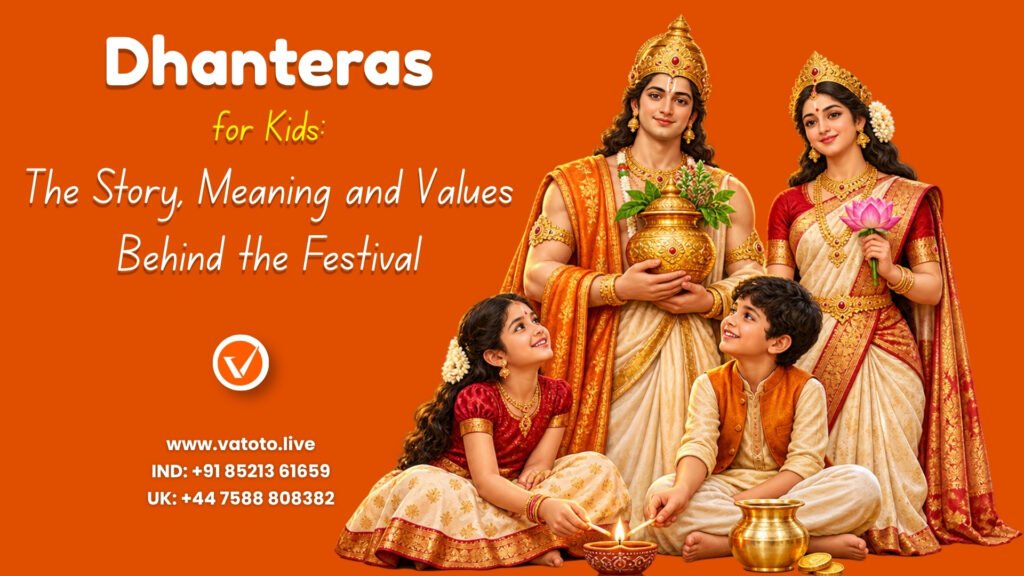
The Diwali journey begins with Dhanteras for kids, which reminds families that health, gratitude and wise use of wealth are forms of prosperity.
Chhoti Diwali carries the journey forward. It asks families to remove darkness, clean the body and mind, and prepare for a new beginning.
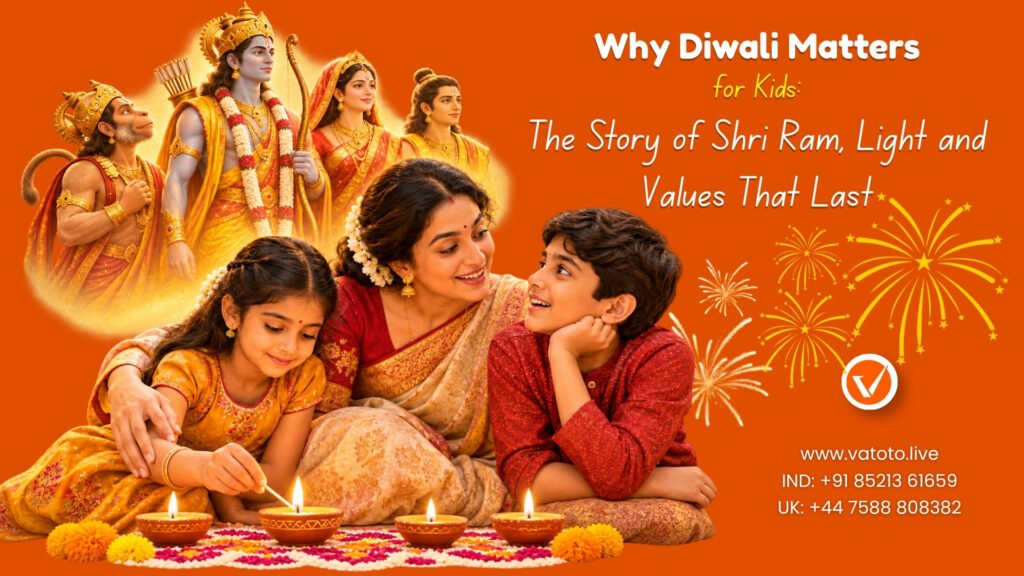
Then comes the main Diwali celebration for children, associated in many parts of India with Shri Ram’s return to Ayodhya, Lakshmi Puja and homes filled with rows of glowing diyas.
Each day has its own story, but together they create one larger movement:
Preparation → Cleansing → Light → Gratitude → Renewed relationships
Frequently Asked Questions About Chhoti Diwali
1. Why is Chhoti Diwali celebrated?
Chhoti Diwali remembers the defeat of Narakasur and the freedom of those who had suffered under his rule. It symbolises the victory of goodness, courage and light over cruelty and darkness.
2. Is Chhoti Diwali the same as Narak Chaturdashi?
The names are often used for the same festival, although customs and timing can vary between regions. It is also known as Narak Chaudas, Roop Chaudas, Kali Chaudas and Naraka Chaturdasi.
3. Who defeated Narakasur?
The Bhagavata Purana describes Shri Krishna defeating Narakasur while Satyabhama accompanies him. In a popular regional tradition, Satyabhama plays the decisive role because she is associated with Bhumi Devi, Narakasur’s mother.
4. Why was Narakasur considered cruel?
Narakasur misused his strength, conquered kingdoms, stole sacred treasures and imprisoned thousands of women. His actions brought fear and suffering to many people.
5. Why is Satyabhama important in the story?
Satyabhama accompanied Shri Krishna into the battle. In several regional retellings, she is the warrior who finally defeats Narakasur. Her role represents courage, justice and the strength to oppose wrongdoing.
6. Why do people take an oil bath on Narak Chaturdashi?
The early morning Abhyang Snan represents physical cleansing and a fresh beginning before Diwali. It is especially important in Maharashtra and several South Indian traditions.
7. Why are diyas lit on Chhoti Diwali?
Diyas represent the removal of darkness and the arrival of hope, courage and wisdom. They also prepare the home for the main Diwali celebration.
8. How can I explain Chhoti Diwali to a young child?
Say:
“Chhoti Diwali remembers the day Shri Krishna and Satyabhama stopped Narakasur from hurting people. Those he had trapped became free, and families celebrated by bringing light after darkness.”
9. Is Chhoti Diwali celebrated in the same way everywhere?
No. Traditions vary across India. Some families focus on Abhyang Snan, some light diyas, some create and burn Narakasur effigies, and others observe customs connected with Kali Chaudas or Kali Puja.
The Light That Comes Before Diwali
Chhoti Diwali is sometimes treated as a smaller celebration waiting for the main festival to arrive. But its message is important in its own right.
Before a home fills with the light of Diwali, something must be cleared away.
Before freedom can be celebrated, injustice must be challenged.
Before a new beginning can feel real, people must be willing to recognise the habits and choices that create darkness.
The story of Shri Krishna, Satyabhama and Narakasur gives children an unforgettable way to understand these ideas. Narakasur shows what happens when power loses its connection with responsibility. Shri Krishna shows the courage to protect. Satyabhama shows that strength and compassion can exist together. The freed captives remind everyone why standing against injustice matters.
That is the true meaning of Chhoti Diwali for kids: not simply a smaller Diwali, but a celebration of courage, cleansing, freedom and the first light of a better beginning.
Vatoto.live helps children aged 4–16 discover Indian stories, shlokas and values through warm, live online learning. In Geeta Sparks, children explore Krishna’s wisdom through stories, discussions and meaningful shlokas. Chalisa Champs introduces the courage, humility and devotion of Hanuman Ji through the Hanuman Chalisa and stories from his life.
Book a free demo class and help your child experience Indian culture as something meaningful, joyful and alive.
Wishing your family a bright, courageous and meaningful Chhoti Diwali.