Navratri, Durga Puja and Dussehra for Kids: A Parent’s Guide to 9 Nights, 9 Values
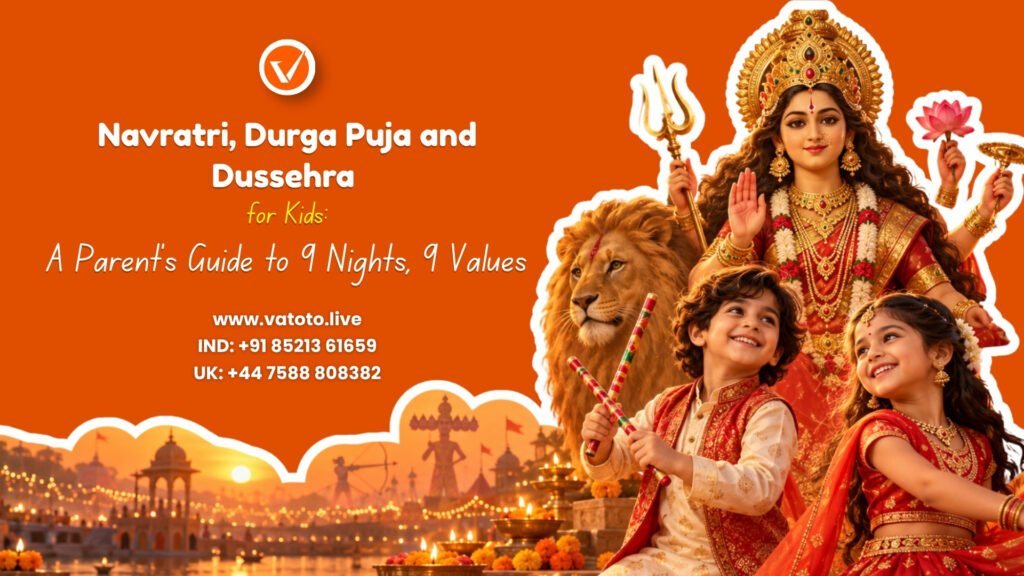
Ask a child living abroad what Navratri means, and they may reply, “It’s when we dress up and play garba.” Ask them about Durga Puja, and they might say, “It has big pandals, delicious food and music.”
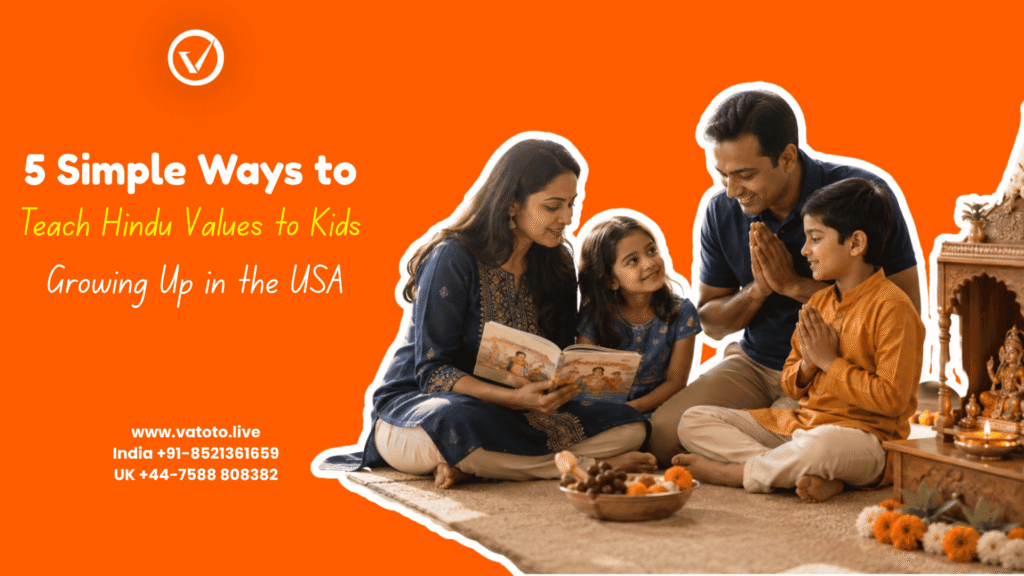
These memories are beautiful and worth cherishing. Yet beyond the colourful celebrations lie meaningful stories and values that can guide children when they face difficulties. This guide is for parents in the USA, UK, Canada, Australia, the UAE and other countries who want to introduce Navratri, Durga Puja and Dussehra to their children in a simple, heartfelt and memorable way.
Why These Festivals Matter for Children Growing Up Abroad
Children raised outside India often find themselves balancing two cultures. A classmate may ask, “What is Navratri?” and the child may not know how to explain it.
Once children understand the meaning and values behind a festival, it becomes more than an occasion their family celebrates. It becomes part of their identity—something they can talk about confidently and proudly. That sense of connection is far more important than performing every ritual perfectly.
Navratri for Kids: What Are Navratri and Durga Puja?
The word Navratri means “nine nights.” Celebrated every year, usually during September or October, it is a time when families honour Goddess Durga—the divine energy that protects the world, removes fear and defeats evil.
Durga Puja, celebrated most prominently by Bengali families, honours the same Goddess through beautifully decorated idols, elaborate pandals and joyful community gatherings.
Celebrations take different forms across India. Gujarat is known for garba and dandiya, while Bengal celebrates Durga Puja. Families in North India may observe fasts and watch Ramlila, while Golu displays are an important tradition in South India.
Although the customs vary, the central message remains the same: courage and goodness ultimately triumph.
The Story You Can Share with Your Child
Long ago, a demon named Mahishasura became extremely proud of his strength. He began troubling everyone, including the gods. No god could defeat him alone, so they brought their powers together. From their combined energy appeared Goddess Durga—radiant, powerful and fearless.
She is often shown riding a lion, which represents bravery. Goddess Durga fought Mahishasura for nine days and nine nights. On the tenth day, she defeated him.
After telling the story, ask your child:
- “Why did the gods have to work together?”
- “What caused Mahishasura’s defeat?”
- “When do you find it difficult to be brave?”
There is no single correct answer. These questions are simply meant to encourage children to think and express themselves.
Nine Nights and Nine Values
Many traditions dedicate each night of Navratri to one of the nine forms of the Goddess, known together as the Navadurga. Customs may differ between families and regions, but parents can connect each night with one simple value:
- Shailaputri—Steadfastness: Remain steady and strong, just like a mountain.
- Brahmacharini—Discipline: Spend a little time practising something every day.
- Chandraghanta—Calm courage: Learn to be brave without becoming angry.
- Kushmanda—Creativity: Create or make something together.
- Skandamata—Love and care: Care for family members, friends and pets.
- Katyayani—Standing up for what is right: Speak kindly when you see something unfair.
- Kalaratri—Fearlessness: Talk openly about your fears and ways to face them.
- Mahagauri—Forgiveness: Release a small grudge you may be holding.
- Siddhidatri—Wisdom: Share one thing you learned during the week.
Choose one of these values each evening and spend just two minutes discussing it during dinner. Even if you manage only three or four such conversations, they can make a lasting impression on your child.
What Does the Bhagavad Gita Teach?
In its sixteenth chapter, the Bhagavad Gita describes the qualities of someone who possesses a “divine nature.” These include fearlessness, purity of heart, truthfulness, self-control, compassion, forgiveness and freedom from pride.
These are also the qualities celebrated during Navratri.
You can explain it to your child by saying:
“Durga’s true power is not only her ability to fight. Her strength is also seen in being honest, kind and fearless when situations become difficult.”
With older children, you can discuss the “demons” that sometimes arise within us—such as anger, jealousy and laziness—and how we can learn to overcome them.
Dussehra or Vijayadashami: When Goodness Wins
The tenth day is known as Dussehra or Vijayadashami. Two different stories are connected with this day, but both convey the same message: truth, goodness and courage will always triumph.
Rama and Ravana
Across many parts of India, Dussehra commemorates Lord Rama’s victory over Ravana.
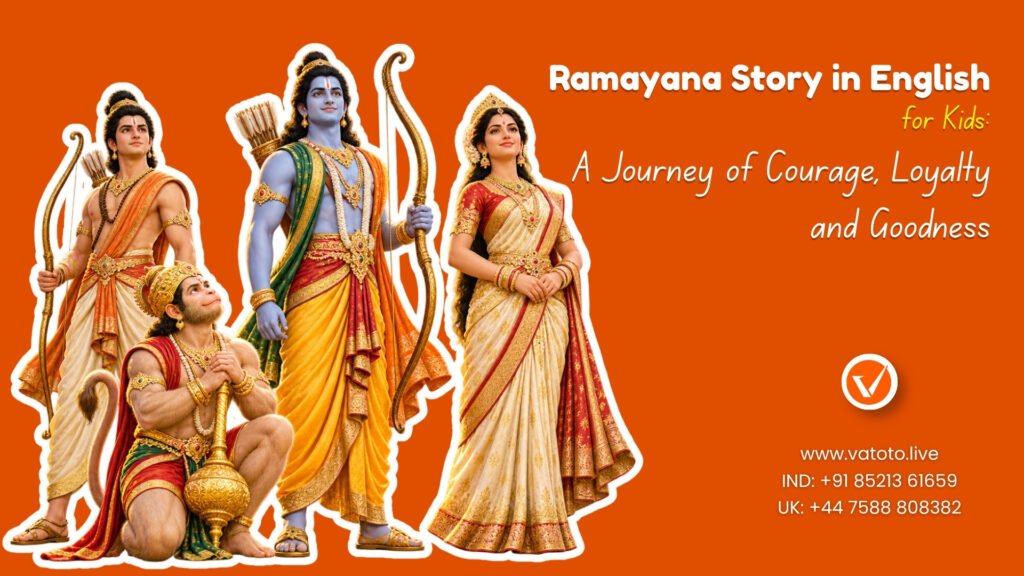
Explain the story simply: Ravana took Sita Mata away to Lanka. Lord Rama, accompanied by Lakshmana, the courageous Hanuman and the vanar sena, crossed the ocean to reach Lanka. A great battle followed, and in the end, goodness defeated pride and wrongdoing.
Ask your child:
“Ravana was intelligent and powerful, so why did he still lose?”
What Do Ravana’s Ten Heads Represent?
According to one popular interpretation, Ravana’s ten heads symbolise ten harmful habits, including anger, greed, jealousy and pride.
Although Ravana was highly learned, he allowed these negative qualities to become too powerful. You can tell your child:
“Whenever we choose kindness instead of anger, we win a small battle—just as Rama did.”
Ramlila and Ravana Effigies
Many communities present performances of the Ramlila and burn large effigies of Ravana on Dussehra.
If attending a local event is not possible, you can watch a short Ramlila clip together at home. Your child could also act out a favourite scene from the story.
Durga and Rama
Vijayadashami is associated with Goddess Durga’s victory in Bengal and other parts of eastern India. In North and Central India, the day is commonly connected with Lord Rama’s victory.
The stories may be different, but their lesson is the same: goodness wins over evil.
Hanuman’s Role
Hanuman Ji represents courage, humility and unwavering loyalty. If your child is learning the Hanuman Chalisa, Dussehra is a meaningful time to recite a few verses together.
Family Activity: “Write Your Ravana”
Ask every member of the family to write or draw one habit they would like to improve. Fold the papers and say together:
“Today, I choose to win over this.”
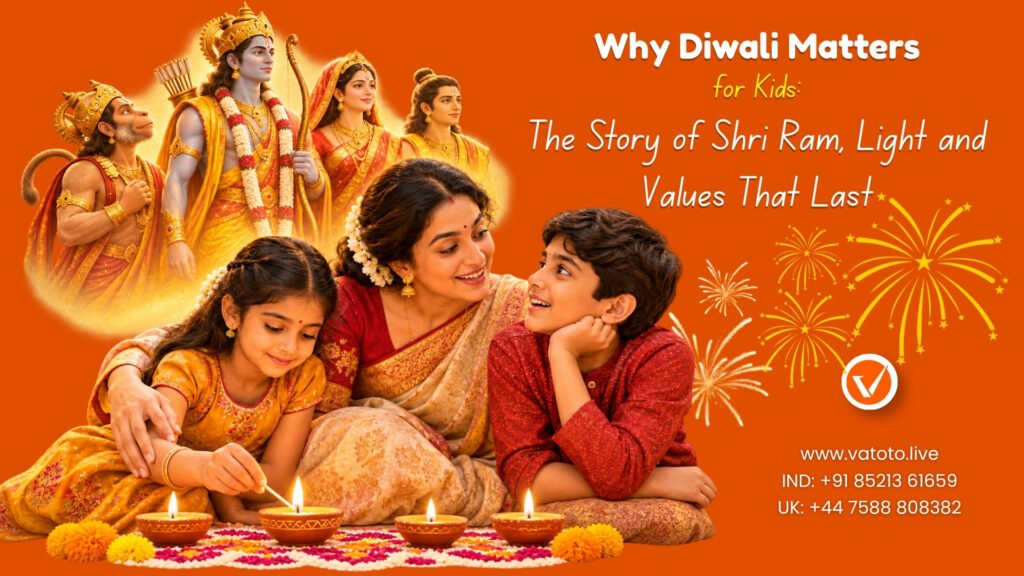
After his victory, Lord Rama returned to Ayodhya, where people welcomed him by lighting rows of diyas. This homecoming is the story associated with Diwali—first came the victory, followed by the joyful return home.
Simple Ways to Celebrate Abroad
You do not need an elaborate celebration to make Navratri and Dussehra meaningful for your child. Try any of these ideas:
- Create a small altar or Golu display and allow your child to decorate it.
- Perform a short evening aarti. Even five minutes is meaningful.
- Visit a local garba or Durga Puja celebration and later ask your child what they observed.
- Plan nine small challenges, such as sharing a snack or writing a thank-you note.
- Prepare a festive meal together.
- Encourage your child to teach a friend about the festival, helping them feel more confident at school.
- Read a brief bedtime story from the Ramayana or Devi Mahatmya.
A puja does not have to be perfect. What children often remember most is how the celebration made the home feel—the stories, music, food and time spent together. Through stories and simple conversations, Navratri for kids can become a meaningful lesson in courage, kindness and inner strength.
Ideas According to Age
Ages 4–6: Use colourful pictures, perform a simple aarti and make a paper crown.
Ages 7–9: Narrate the festival story and ask one thoughtful question each day.
Ages 10 and above: Talk about fear, inner strength and making the right choices. You can also encourage your child to keep a journal.
Frequently Asked Questions
Why Does Navratri Last for Nine Nights?
Each night honours one of the nine forms of the Goddess. The tenth day celebrates her victory.
What Is the Difference Between Navratri and Durga Puja?
Both festivals honour Goddess Durga. Navratri is observed throughout India through different regional customs. Durga Puja is particularly associated with Bengali traditions and is known for its idols, pandals and community celebrations.
Why Do People Celebrate Dussehra?
Dussehra celebrates the victory of good over evil. In many regions, it marks Lord Rama’s victory over Ravana. Elsewhere, it honours Goddess Durga’s victory over Mahishasura.
How Can I Explain Dussehra to a Young Child?
Tell your child that Dussehra reminds us that goodness and truth can defeat anger and pride. You can then share the story of Rama and Ravana in a few simple sentences.
Do Children Have to Fast During Navratri?
No. Whether or not to fast is a personal decision for each family.
How Can I Help My Child Stay Connected Throughout the Year?
Focus on small but consistent experiences—festival celebrations, stories, shlokas and regular conversations about values.
Keep the Spark Alive
Festivals introduce children to the beauty of Indian culture, but values take root through consistent and gentle practice.
At Vatoto.live, children aged 4–16 explore the Bhagavad Gita and Hanuman Chalisa through live online classes filled with stories, thoughtful discussions and relatable, real-life examples—all taught with warmth.
Book a free class and discover how much your child enjoys learning.
Wishing your family a joyful Navratri filled with courage and happiness.