Why Diwali Matters for Kids: The Story of Shri Ram, Light and Values That Last
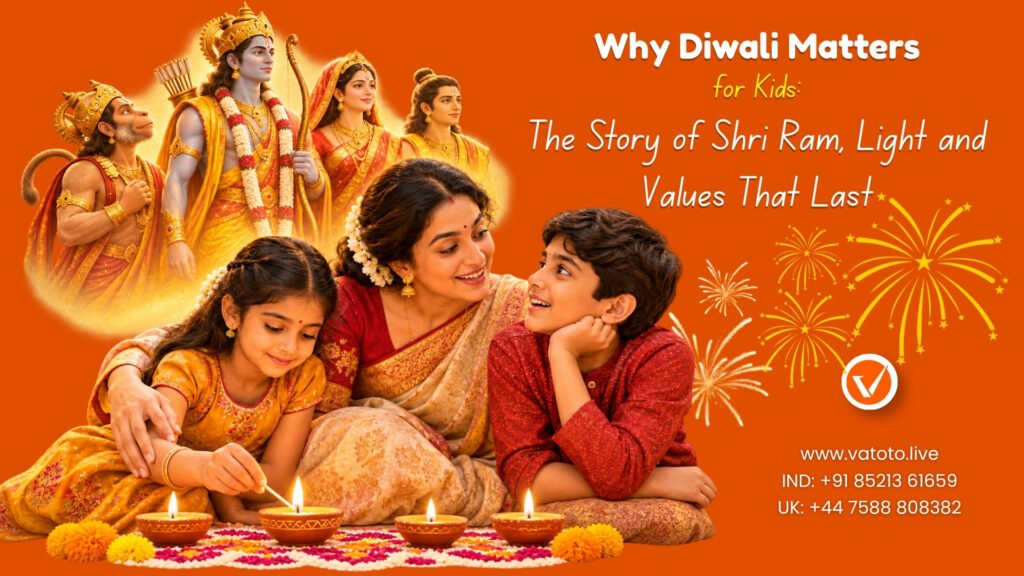
The first diya is often the one children remember.
They watch as a parent gently places the wick inside the little clay lamp, adds oil and brings a flame close to it. A moment later, the dark corner begins to glow. Soon, there are diyas near the doorway, lights across the balcony, a colourful rangoli on the floor and the familiar fragrance of festive food coming from the kitchen.
To a child, Diwali can feel almost magical.
But Diwali offers children something even more valuable than sweets, decorations and new clothes. It gives parents a natural opportunity to talk about courage, hope, gratitude, loyalty and the importance of choosing what is right.
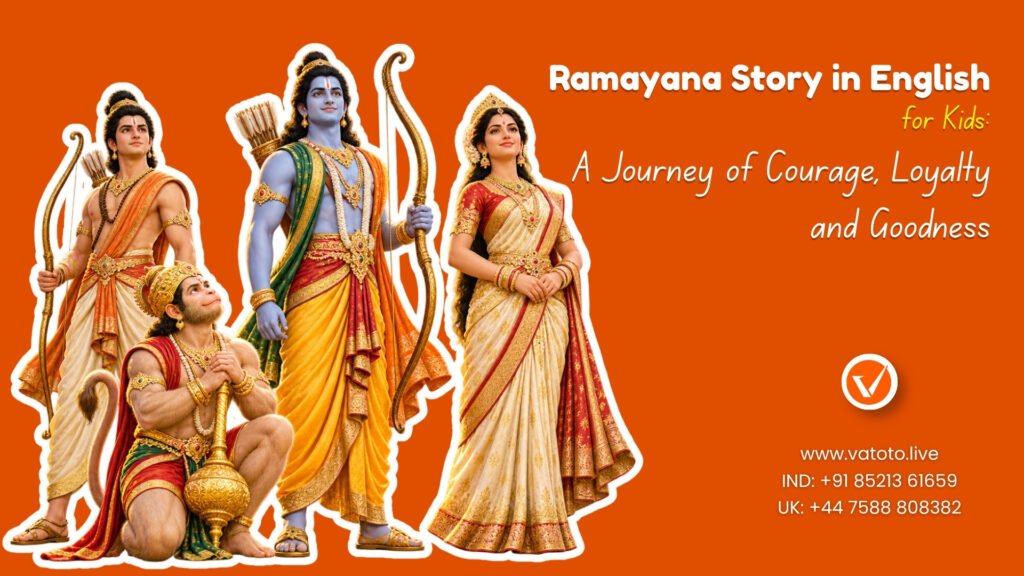
The meaning of Diwali for children becomes memorable when they understand why the lamps are lit and whose return is being celebrated. The story of Shri Ram, Mata Sita, Lakshman Ji and Hanuman Ji turns an exciting festival into a lesson children can carry into school, friendships and everyday decisions.
For families in India and for Indian parents raising children in the USA, UK, Canada, Australia, the UAE and elsewhere, this guide offers a simple and meaningful way to share the story of Diwali for kids—without making it feel like another lesson they must memorise.
What Does Diwali Actually Teach Children?
Diwali is commonly described as the victory of light over darkness, goodness over wrongdoing and knowledge over ignorance.
These words are beautiful, but they can feel abstract to a five- or eight-year-old. Children understand them better when “light” and “darkness” are connected with choices they make every day.
Darkness can be:
- Hiding a mistake because we are afraid
- Saying something hurtful in anger
- Excluding someone from a game
- Giving up before making a sincere effort
- Allowing jealousy or pride to guide our behaviour
Light can be:
- Telling the truth
- Saying sorry
- Helping someone who is struggling
- Including a child who feels left out
- Remaining hopeful during a difficult time
- Choosing kindness even when we are upset
This is how Diwali becomes relevant to a modern child. The festival teaches that light is not only something we place around the house. It is something we create through our thoughts, words and actions.
A small diya cannot illuminate an entire city by itself, but it changes the space around it. In the same way, one honest, brave or compassionate choice may appear small, yet it can make someone’s day—and sometimes their life—better.
That is one of the most powerful lessons parents can offer while teaching Indian culture to kids: traditions are not merely actions we repeat. They carry values that can help us live thoughtfully.
The Diwali Story for Children: Shri Ram’s Journey Home
Children are naturally drawn to stories. The Ramayan gives them adventure, difficult choices, friendship, loyalty, courage and a long-awaited homecoming.
When sharing Ramayan stories for children, parents do not need to explain every event in one sitting. Start with the main journey and pause whenever your child becomes curious.
Shri Ram Leaves Ayodhya
Long ago, Ayodhya was preparing to welcome Shri Ram as its king. He was loved for his courage, compassion, wisdom and commitment to dharma.
However, because of a promise made by his father, King Dasharath, Shri Ram was asked to leave Ayodhya and live in the forest for fourteen years.
Shri Ram accepted the decision and prepared to leave the palace. Mata Sita chose to accompany him, and Lakshman Ji joined them out of love and loyalty.
For a child, fourteen years can be difficult to imagine. You might say:
“Think about being away from your home, room, friends and favourite things for longer than you have been alive.”
This helps children recognise the sacrifice involved.
It is also a good moment to explain that courage does not always mean fighting a battle. Sometimes courage means facing an unexpected change without giving up on our values.
Ask your child:
“Have you ever had to do something difficult even though you wished things could be different?”
Their answer might involve changing schools, trying a new activity, moving to another country or admitting a mistake. These everyday connections make Shri Ram’s story feel personal rather than distant.
Mata Sita Is Taken to Lanka
During their life in the forest, Ravan took Mata Sita to Lanka.
Shri Ram and Lakshman Ji began searching for her. Along the way, they met Sugriv and Hanuman Ji.
Hanuman Ji immediately recognised Shri Ram’s goodness. His devotion was not passive; it inspired him to act with courage, intelligence and determination.
When the vanar sena was searching for Mata Sita, Hanuman Ji crossed the vast ocean to reach Lanka. He found her in Ashok Vatika and delivered Shri Ram’s message and ring, assuring her that help was coming.
For children, this part of the story holds a beautiful lesson: hope can be carried from one person to another.
Hanuman Ji could not end Mata Sita’s difficulty immediately, but he gave her courage and reminded her that she was not forgotten.
Ask your child:
“How can we give someone hope when they are having a difficult day?”
Sometimes it may be through a helpful action. At other times, it may be by listening, sitting beside them or saying, “I am here for you.”
Hanuman Ji Shows What Real Strength Means
Children often admire Hanuman Ji because he could fly across the ocean, lift a mountain and face powerful enemies. Yet his greatest quality was not physical strength. It was the way he used his strength.
Hanuman Ji did not perform courageous acts to show that he was superior to others. He used his abilities in service of Shri Ram and Mata Sita.
That distinction matters.
A child may be talented in studies, sport, music, art or speaking. The lesson from Hanuman Ji is that a talent becomes truly meaningful when it is used with humility and for a good purpose.
You can ask:
“What is something you do well, and how could you use it to help another person?”
A child who reads confidently might help a younger sibling. Someone who is good at drawing might make a card for a sick friend. A child who enjoys talking might welcome a new student at school.
This is how the values behind the Hanuman Chalisa for kids can become part of ordinary life.
Shri Ram Defeats Ravan
With the help of Hanuman Ji, Sugriv and the vanar sena, Shri Ram reached Lanka. A great battle followed, and Ravan was eventually defeated. Mata Sita was freed.
This part of the story is often described as the victory of good over evil. Parents can make the lesson more thoughtful by explaining that Ravan was not defeated because he lacked intelligence or power. He was highly learned and powerful, but pride and harmful choices prevented him from using those abilities wisely.
Children can understand this difference:
Being clever is valuable, but cleverness must be guided by character.
Being strong is useful, but strength must not be used to frighten or control others.
A popular symbolic explanation says that Ravan’s ten heads represent negative qualities such as anger, pride, greed and jealousy. Whether or not a family uses that interpretation, it can begin an honest conversation about the habits everyone must learn to manage within themselves.
Ask:
“What happens when anger starts making our decisions for us?”
This brings the battle between good and wrongdoing into a form children can recognise.
The Return to Ayodhya
After fourteen years, Shri Ram, Mata Sita and Lakshman Ji returned to Ayodhya.
The people had waited for them with love and hope. The city was decorated, and rows of diyas were lit to celebrate their homecoming. Ayodhya glowed as people welcomed the return of their beloved Shri Ram.
This is the heart of the Diwali story for children.
The lamps expressed happiness, relief and welcome. A long and difficult chapter had ended, and a new beginning had arrived.
When children light a diya, tell them:
“This little flame reminds us that hope can return after a difficult time. It also reminds us to welcome goodness into our thoughts, words and actions.”
There is no need to tell young children that the lamps were lit because Shri Ram might otherwise have become lost. The diyas are better understood as a joyful expression of welcome and the symbolic return of light.
What Children Can Learn from Each Ramayan Character
Every important character in the Diwali story offers children a different value.
| Character | Quality children can learn | Everyday example |
|---|---|---|
| Shri Ram | Dharma and responsibility | Telling the truth and keeping a promise |
| Mata Sita | Courage and inner strength | Staying hopeful during a difficult change |
| Lakshman Ji | Loyalty and service | Supporting a family member without being asked |
| Hanuman Ji | Devotion, humility and wise action | Using a talent to help someone |
| The people of Ayodhya | Love, patience and welcome | Helping a guest or new classmate feel included |
| Ravan’s story | Intelligence needs humility | Not allowing pride or anger to control our choices |
This table can also be turned into a family conversation. Ask each person to choose one character and one quality they want to practise during the coming week.
Five Meaningful Diwali Activities for Kids
Children remember festivals best when they are allowed to take part. A small responsibility or creative activity helps them feel that Diwali belongs to them too.
These Diwali festive activities for kids connect celebration with a clear value.
| Activity | Value it develops | Simple family prompt |
|---|---|---|
| Decorate a value diya | Self-awareness | “What good quality do you want your diya to represent?” |
| Create a kindness rangoli | Cooperation and welcome | “How can we help someone feel included?” |
| Act out the Ayodhya homecoming | Empathy and expression | “How would you welcome Shri Ram?” |
| Declutter and share | Generosity and gratitude | “What can we give with love?” |
| Hold a five-minute chanting circle | Focus and cultural connection | “What does this line teach us?” |
1. Decorate a “Light Within Me” Diya
Give your child a plain clay diya or a paper diya to decorate. Ask them to choose one value they would like their diya to represent:
- Courage
- Kindness
- Honesty
- Patience
- Gratitude
- Self-control
Write the chosen quality beside the diya.
Then ask for a real-life example. If your child chooses courage, they might decide to speak in class even though they feel nervous. If they choose kindness, they might include someone in a game.
The purpose is not to assign a fixed spiritual meaning to every physical part of the diya. Instead, the activity uses the light as a simple symbol of the quality a child wants to strengthen.
2. Make a Kindness Rangoli Together
Create a rangoli using flower petals, coloured rice, reusable pieces, paper shapes or child-safe colours.
Give every family member one small part of the design. As the rangoli develops, explain that its beauty comes from many different shapes and colours working together.
Families and communities are similar. People may have different personalities, abilities and traditions, but everyone can contribute something meaningful.
When the rangoli is complete, ask:
“What did each person add to make it beautiful?”
The question encourages children to notice and appreciate other people’s contributions.
3. Bring the Homecoming to Life
Children enjoy role-play because it allows them to step inside a story.
Use simple household items to recreate Shri Ram’s return to Ayodhya. Paper lamps can line the path, building blocks can become the city and family members can take different roles.
One child might announce, “Shri Ram is returning!” Another can place paper diyas along the way. Someone else can describe how the people of Ayodhya might have felt.
The activity does not need elaborate costumes or expensive props. Its purpose is to help children feel the joy, waiting and love behind the homecoming.
Afterwards, ask:
“How can we make someone feel happy and welcome in our home or school?”
4. Declutter and Share Thoughtfully
Diwali cleaning can become more meaningful when children take part.
Invite your child to choose books, toys or clothes that are still in good condition but are no longer being used. Explain that giving should be done respectfully—not as a way to discard broken or unwanted things.
Sort and clean the items together, then donate them through a reliable local organisation or community initiative.
Avoid presenting another family or child as an object of pity. Instead, explain:
“We have something useful that we are no longer using. Sharing it gives that item a new life and may bring happiness to someone else.”
This teaches generosity without creating a sense of superiority.
5. Begin a Five-Minute Family Chanting Routine
Diwali can become noisy and overstimulating. A short chanting routine creates a calm pause in the celebration.
Choose one simple shloka or a few lines from the Hanuman Chalisa. Listen first, repeat slowly and explain the meaning in one sentence.
Five minutes is enough.
Do not turn the activity into a pronunciation test. Gentle correction is helpful, but participation and understanding matter more than immediate perfection.
For children interested in learning more, Vatoto.live’s Chalisa Champs introduces the Hanuman Chalisa through pronunciation, meaning, stories and age-appropriate practice.
Why Stories and Shlokas Matter in Childhood
Children do not build a cultural connection through festivals alone. That connection grows through repeated moments: hearing a story in the car, chanting with a grandparent, asking a question during aarti or learning why a particular tradition matters.
Stories give values a face
“Be loyal” is an instruction. Lakshman Ji accompanying Shri Ram gives loyalty a story.
“Use your strength well” is advice. Hanuman Ji crossing the ocean to find Mata Sita gives that advice a memorable example.
“Do the right thing” can sound vague. Shri Ram’s commitment to dharma shows children that the right choice may still require sacrifice.
Stories make values easier to picture, discuss and remember.
Chanting encourages listening and repetition
Learning a shloka requires a child to listen carefully, remember the order of sounds and repeat them with attention. These are useful learning habits.
However, it is better not to claim that chanting guarantees changes in brain structure, speech development or academic performance. Children respond differently, and strong scientific claims require much more evidence than a cultural blog can responsibly provide.
The genuine benefits are meaningful on their own: chanting can create a familiar family routine, encourage attentive listening and help children feel connected with a tradition.
Understanding builds cultural confidence
Children growing up outside India may be asked:
“What is Diwali?”
“Why are you wearing those clothes?”
“Why does your family light lamps?”
A child who knows the story can answer comfortably:
“Diwali is the Festival of Lights. My family remembers Shri Ram returning to Ayodhya after fourteen years. The lights remind us that goodness and hope can overcome darkness.”
They do not need a perfect speech. A simple, confident answer is enough to help them feel proud rather than uncertain.
Meaning makes participation easier
A child may resist being told to sit through a long ritual they do not understand. Participation becomes easier when parents explain the reason and give the child an active role.
Let them:
- Arrange flowers
- Place unlit diyas
- Ring the bell at the right moment
- Offer prasad with an adult
- Choose a shloka
- Tell one part of the story
- Ask questions
The goal is not to create a flawless performance. It is to create a positive relationship with the tradition.
Frequently Asked Questions About Diwali for Kids
1. How do I explain Diwali to a five-year-old?
Say:
“Diwali is the Festival of Lights. Shri Ram, Mata Sita and Lakshman Ji returned home after fourteen years. Everyone was so happy that they lit rows of diyas to welcome them. The lights remind us that goodness and hope can overcome darkness.”
Then reinforce the story with a picture, paper diya or short role-play.
2. My child will not sit through a long puja. What should I do?
Do not expect a young child to remain still for an adult-length ritual. Give them a small role and allow age-appropriate movement.
A four-year-old may place flowers or ring a bell. An older child may read a short meaning, lead one chant or help distribute prasad.
Short, positive participation builds a stronger connection than forced sitting.
3. How should I explain Ravan without frightening a young child?
Focus on his choices rather than creating a frightening description.
Explain that Ravan was intelligent and powerful but allowed pride and harmful decisions to guide him. Shri Ram’s victory shows that power without goodness cannot lead to lasting success.
If you mention the ten heads as ten negative qualities, describe it as a popular symbolic explanation rather than a definite scriptural meaning.
4. Can children growing up abroad connect with Ramayan stories?
Yes. The situations may be ancient, but the values are familiar: keeping a promise, helping a friend, managing anger, remaining hopeful and using our talents well.
Parents can connect each story with school, friendships, sport, family responsibilities and other experiences children recognise.
5. What are some easy spiritual activities for Diwali?
Try one or two of the following:
- Tell the story of Shri Ram’s return
- Decorate a value diya
- Chant one short shloka
- Recite a few lines of the Hanuman Chalisa
- Make a gratitude list
- Donate useful items
- Create a kindness rangoli
- Call grandparents and ask about their childhood Diwali
One meaningful activity is better than an exhausting schedule.
6. Does my child need to understand Sanskrit or Hindi?
No. Explain the story and values in the language your child understands best.
Original names, words and chants can be introduced gradually with simple meanings. Cultural connection begins with understanding, not language perfection.
7. Is Diwali celebrated in the same way everywhere?
No. Customs and stories vary among regions, families and communities. Shri Ram’s return to Ayodhya is one of the best-known Diwali traditions, while other observances may focus on Goddess Lakshmi, Lord Krishna and Narakasura, Govardhan Puja, Mahavir’s nirvana or Bandi Chhor Divas.
Begin with your family’s tradition while teaching children to respect the variety of Diwali celebrations across India.
The Light Children Carry Beyond Diwali
The diyas will eventually burn out. The rangoli will be cleared, the sweets will be finished and the festive clothes will return to the cupboard.
But the story does not need to end with the festival.
Every time a child tells the truth despite feeling afraid, they choose light.
Every time they welcome someone who feels left out, they recreate a little of Ayodhya’s warmth.
Every time they use their ability to help rather than impress, they follow Hanuman Ji’s example.
Every time they face a difficult change without abandoning hope, they understand the courage shown throughout the Ramayan.
That is why Diwali matters for children. It gives them more than a beautiful memory. It gives them stories they can return to when they need courage, guidance or a reminder of who they want to become.
Vatoto.live offers live online cultural learning for children aged 4–16 through stories, shlokas, chanting and meaningful conversation.
In Geeta Sparks, children explore Krishna’s teachings and Bhagavad Gita shlokas through age-appropriate stories and real-life examples. In Chalisa Champs, children learn the Hanuman Chalisa with pronunciation, meaning and inspiring stories about Hanuman Ji’s courage, humility and devotion.
Help your child stay close to Indian roots while building a strong mind and a good heart. Book a free demo class or send a WhatsApp message to learn more.
May the light your child discovers this Diwali continue to guide their choices throughout the year.