12 Timeless Lessons from Lord Krishna Every Child Should Learn
In today’s world all the children grow up in a fast-changing world which is filled with competition, technology, and constant distractions. While modern education teaches subjects like mathematics, science, and languages, it is often seen that it leaves little room for teaching character, wisdom, and moral strength.
This is where the teachings of Lord Krishna become incredibly valuable.
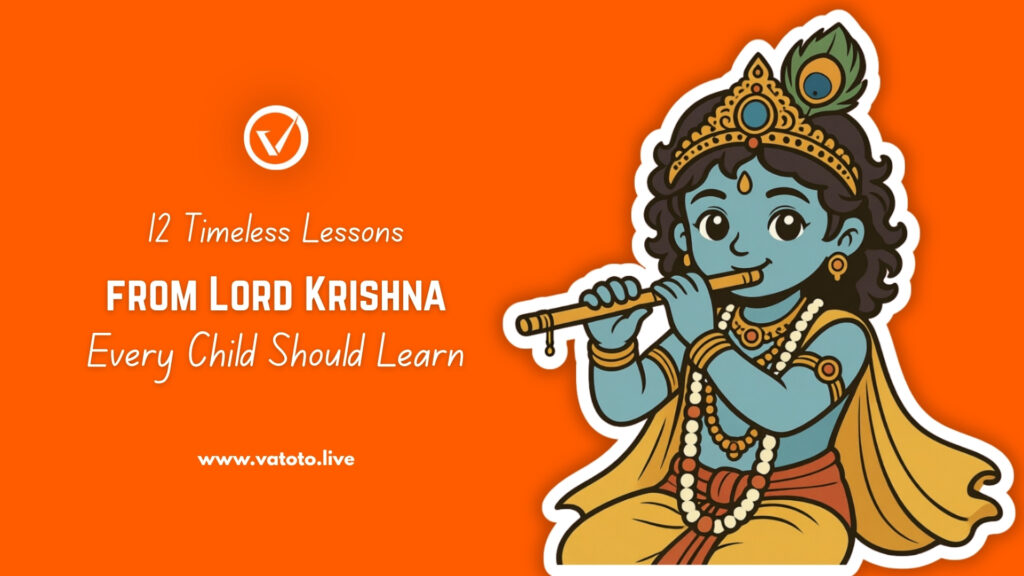
Lord Krishna is one of the most beloved figures in Indian culture and spirituality. His life stories from the Mahabharata, Bhagavad Gita, and Srimad Bhagavatam are filled with wisdom, courage, compassion, and intelligence. These stories are not just ancient legends—they are powerful guides which help us lead a meaningful life.
For children, Krishna’s life offers lessons which help them to become a confident, kind, disciplined, and wise individuals.
Let’s explore twelve important life lessons from Lord Krishna that every child should know and practice.
Why Krishna’s Teachings Are Perfect for Children
Before we go ahead and explore the lessons taught by Krishna, it is really important to understand why Krishna’s life is meaningful, especially for the young minds.
Unlike many spiritual figures who lived as ascetics or saints in isolation, Krishna’s life was full of action, friendships, challenges, and adventures. He was:
• A playful child in Gokul
• A loving friend in Vrindavan
• A wise teacher in the Bhagavad Gita
• A courageous leader during the Mahabharata
Because of this, children can easily relate to Krishna’s life. His stories teach the children values through situations children can understand—friendship, bravery, kindness, and responsibility.
These lessons help children develop qualities that shape their future character.
1. Always Stand for Truth and Dharma
One of the most important lessons from Krishna’s life is the importance of standing for truth and righteousness (Dharma).
During the Mahabharata, Krishna guided the Pandavas when they were facing injustice from the Kauravas. Even when the Pandavas were weak and outnumbered, Krishna encouraged them to fight for justice instead of accepting wrongdoing silently.
At the beginning of the Kurukshetra war, Arjuna became confused and emotional. He did not want to fight against his own relatives and teachers. Seeing Arjuna’s hesitation, Krishna explained that protecting truth and justice is the duty of a warrior.
Krishna advised Arjuna in the Bhagavad Gita:
“Considering your duty as a warrior, you should not hesitate. For a warrior, there is nothing greater than a battle fought for righteousness.”
— Bhagavad Gita 2.31
Through this teaching, Krishna reminded Arjuna that sometimes doing the right thing may feel difficult, but standing for Dharma is always the correct path.
For children, this lesson means choosing honesty even when it is hard. For example:
• telling the truth even if it may lead to punishment
• refusing to cheat during an exam
• standing up for a friend who is being treated unfairly
Krishna’s message teaches children that truth, honesty, and fairness always build strong character, and these values eventually lead to respect and success in life.
2. Courage Comes From Faith
Krishna’s life is filled with moments of ups and downs where courage was required.
As a child, Krishna faced dangerous demons which were sent by King Kansa to hurt him. Still, Krishna didn’t get scared and fearful, instead he remained fearless because he had complete faith in himself and in divine protection.
This teaches children that fear can be overcome through confidence and inner belief.
Children often face fears such as:
• Fear of exams
• Fear of failure
• Fear of speaking in public
• Fear of making mistakes
Krishna’s life shows that faith and courage always go hand-in-hand. When children believe in themselves, they can face any challenge.
3. Friendship Should Be Loyal and Pure
Krishna’s friendship with his childhood friend, Sudama, is one of the most touching stories in our Indian culture and history.
Sudama was a poor childhood friend of Krishna. Even though Krishna later became a king in Dwarka, he never forgot the bond they shared as children. When Sudama finally came to visit him after many years, Krishna ran to welcome him, embraced him warmly, and treated him with great respect.
Krishna showed that true friendship is not based on wealth, power, or status, but on love, loyalty, and sincerity.
Krishna often showed through his actions that a real friend stands by you in every situation. His relationship with Arjuna also reflects this idea. Krishna supported Arjuna not just as a guide in the battlefield but also as a loyal friend who helped him overcome confusion and fear.
A simple teaching from Krishna reminds us:
“A true friend is the one who stands beside you in both happiness and difficulty.”
For children, this lesson means that a real friend:
• supports you during difficult times
• celebrates your success
• does not leave you when situations become hard
Friendship built on kindness, trust, and loyalty becomes one of the strongest bonds in life.
4. Intelligence Is More Powerful Than Strength
Krishna was not known for physical strength alone. What made him remarkable was his wisdom and intelligence.
Many problems in the Mahabharata were solved through Krishna’s strategic thinking. He understood people, situations, and consequences very deeply.
Children often believe that being strong or powerful is the most important thing. However, Krishna’s life teaches that wisdom, patience, and intelligent thinking are far more powerful.
Encouraging children to think before acting helps them develop:
• problem-solving skills
• emotional intelligence
• better decision-making abilities
These qualities become extremely valuable later in life.
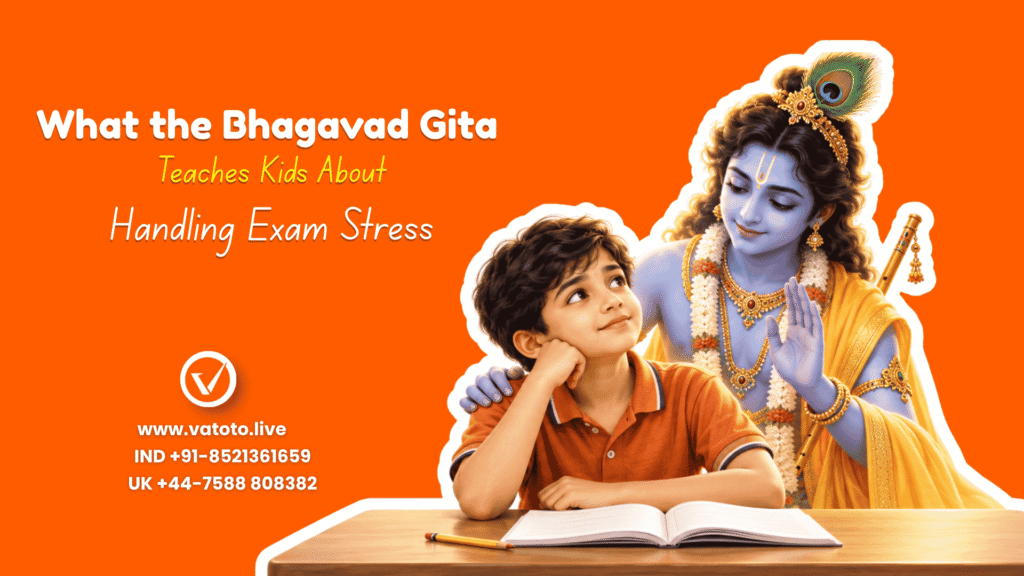
5. Do Your Duty Without Worrying About Results
One of the most famous teachings from the Bhagavad Gita is Krishna’s advice to Arjuna:
“Focus on your duty, not on the results.”
When Arjuna hesitated before the great war of Kurukshetra, Krishna reminded him that his responsibility was to perform his duty as a warrior. Krishna explained that people should focus on doing their work sincerely instead of worrying constantly about success or failure.
Krishna says in the Bhagavad Gita:
“You have the right to perform your duty, but not to the fruits of your actions.”
This teaching encourages people to put their full effort into their work without becoming anxious about the outcome.
For children, this lesson means:
• Study sincerely
• Practice regularly
• Do your best effort
But avoid worrying too much about marks, rankings, or comparison with others.
For example, when preparing for an exam, a child should focus on learning the subject properly and giving their best effort, rather than constantly worrying about whether they will get the highest marks.
When children focus on effort instead of outcome, they develop confidence, resilience, and peace of mind.
Krishna’s message reminds us that true success comes from sincere effort and dedication.
6. Respect Parents, Teachers, and Elders
Krishna always showed respect toward elders and teachers.
Even though he was divine, Krishna learned under the guidance of Guru Sandipani like any other student. He respected the wisdom of teachers and followed discipline.
Children can learn an important lesson here: respecting elders brings knowledge and blessings.
When children develop this habit early in life, they naturally become humble and grateful individuals.
Respecting elders also helps children learn important values such as:
• patience
• gratitude
• listening skills
These qualities strengthen family relationships and social harmony.
7. Happiness Comes From Within
Krishna is often depicted smiling, playing the flute, and enjoying life.
Even during difficult circumstances, Krishna remained calm and joyful. His happiness did not depend on external things like wealth or power.
Children today often believe that happiness comes from:
• toys
• gadgets
• video games
• social media attention
Krishna’s life teaches that true happiness comes from inner peace, love, and meaningful relationships.
Teaching children to find joy in simple things—music, friendship, learning, and nature—helps them build emotional balance.
8. Help Others Whenever Possible
Krishna always protected those who needed help.
He saved the people of Vrindavan by lifting Govardhan Hill, protecting them from heavy rains caused by Indra’s anger. This story teaches children the importance of helping and protecting others.
Kindness is a powerful virtue.
Children can practice kindness by:
• helping classmates
• sharing with friends
• caring for animals
• supporting someone who feels sad
When kindness becomes a habit, children grow into compassionate individuals who contribute positively to society.
9. Stay Calm in Difficult Situations
Krishna remained calm even during the most intense moments of the Mahabharata war.
When Arjuna was confused and emotionally overwhelmed, Krishna did not panic. Instead, he patiently explained the deeper meaning of life and duty through the Bhagavad Gita.
This teaches children that staying calm helps us think clearly and make better decisions.
In stressful situations—exams, conflicts, or failures—calm thinking is extremely helpful.
Parents and teachers can guide children to practice calmness through:
• breathing exercises
• reflection
• patience before reacting
This helps build emotional stability.
10. Never Underestimate Yourself
Many people initially underestimated Krishna.
As a young boy in Gokul, he appeared playful and carefree. But later, he proved to be one of the wisest leaders and guides in history.
Children often doubt their own abilities, especially when they see others performing better.
Krishna’s life reminds us that every individual has unique strengths and potential.
Encouraging children to believe in themselves helps them explore their talents confidently.
Self-belief is the foundation of success.
11. Leadership Means Serving Others
Krishna never ruled the battlefield directly during the Mahabharata war. Instead, he chose to become Arjuna’s charioteer, guiding him with wisdom and strategy.
This teaches a powerful leadership principle:
A true leader serves others instead of seeking personal power.
Children who learn this lesson develop qualities like:
• responsibility
• teamwork
• empathy
These traits prepare them to become future leaders who help society grow positively.
12. Balance Playfulness With Responsibility
Krishna’s childhood stories in Vrindavan are filled with fun and mischief. He played with friends, stole butter, danced with joy, and enjoyed life.
But as he grew older, he also took on great responsibilities.
This teaches children an important balance:
Life should include both joy and responsibility.
Children should enjoy play, creativity, and laughter, but also understand the importance of discipline and responsibility.
When children learn this balance early in life, they grow into well-rounded individuals.
Why Teaching Krishna’s Lessons to Children Matters Today
Modern education focuses heavily on academic success. However, many parents and educators now realize that character education is equally important.
The teachings of Krishna help children develop:
• emotional intelligence
• moral clarity
• courage and confidence
• kindness and compassion
• leadership qualities
These lessons help children navigate life’s challenges with wisdom and strength.
Teaching Krishna’s Wisdom to the Next Generation
One of the best ways to introduce these values to children is through stories, discussions, and interactive learning.
Children learn more effectively when they:
• listen to engaging stories
• ask questions
• participate in activities
• connect lessons to real life situations
Teaching Krishna’s wisdom through storytelling helps children remember the lessons naturally.
When these teachings become part of their thinking, they guide children throughout life.
Final Thoughts
Lord Krishna’s life is not just a spiritual story—it is a timeless guide for living wisely and compassionately.
His teachings encourage children to:
• choose truth over convenience
• stay courageous during difficulties
• value friendship and kindness
• focus on effort rather than results
• develop wisdom and calm thinking
In a world filled with distractions and pressures, Krishna’s lessons provide children with a strong moral compass.
When children grow up learning these timeless principles, they develop into individuals who are not only successful but also wise, compassionate, and responsible.
And that is the true purpose of education.
Helping Children Learn Krishna’s Wisdom in a Fun Way
Teaching children the life lessons of Lord Krishna becomes much more effective when it is done through engaging stories, discussions, and interactive learning experiences. When children listen to stories from the Bhagavad Gita, Mahabharata, and Krishna’s childhood in Vrindavan, they not only enjoy the narratives but also begin to understand the deeper values behind them.
Parents and teachers today are looking for ways to introduce children to Indian culture, spiritual wisdom, and moral values in a way that feels meaningful and interesting rather than difficult or boring.
Interactive storytelling, guided discussions, and age-appropriate explanations help children connect these ancient teachings to their daily lives.
Platforms such as Vatoto.live are working to bring these timeless teachings to young learners through live, interactive classes designed specially for children. Through stories, activities, and thoughtful discussions, children can explore the wisdom of Krishna and other great figures from Indian scriptures in a way that is engaging, inspiring, and easy to understand.
When children learn these values early in life, they develop qualities like confidence, compassion, discipline, and wise decision-making — qualities that help them grow into responsible and thoughtful individuals.
After all, the goal of education is not just academic success but also the development of character, wisdom, and inner strength.
And the life of Lord Krishna offers one of the most beautiful guides for achieving exactly that.
Krishna Quotes for Children
Here are some simple and powerful teachings of Lord Krishna that children can understand and remember easily.
1. “You have the right to perform your duty, but not to the fruits of your actions.”
This teaches children to focus on doing their best instead of worrying about results.
2. “A calm mind brings inner strength and self-confidence.”
Krishna teaches that staying calm helps us make better decisions.
3. “The mind is both a friend and an enemy.”
If we control our thoughts and actions, the mind helps us succeed.
4. “Where there is righteousness, there is victory.”
Choosing honesty and truth always leads to long-term success.
5. “Perform your duty with dedication and faith.”
Krishna reminds us that sincerity and effort are more important than fear of failure.
These teachings help children develop confidence, discipline, kindness, and wisdom, which are essential qualities for a successful life.
Frequently Asked Questions About Krishna’s Lessons for Children
- Why should children learn about Lord Krishna?
Children can learn many important values from Lord Krishna’s life, such as courage, honesty, kindness, and responsibility. These values help shape a child’s character and decision-making ability. - What are the most important life lessons from Krishna for kids?
Some of the most important lessons include focusing on duty, being truthful, respecting elders, helping others, staying calm during difficulties, and believing in oneself. - How can parents teach Krishna’s lessons to children?
Parents can teach these lessons through storytelling, reading scriptures like the Bhagavad Gita, discussing moral values, and encouraging children to reflect on Krishna’s teachings in everyday situations. - At what age should children learn about Krishna?
Children can start learning simple stories about Krishna as early as 4–5 years old, while deeper teachings from the Bhagavad Gita can be introduced gradually as they grow older. - Why are Krishna’s teachings still relevant today?
Krishna’s teachings focus on universal values like truth, discipline, courage, and kindness. These values are timeless and help children navigate modern life with wisdom and confidence.
Learn Krishna’s Wisdom with Vatoto.live
If you would like your child to explore these timeless teachings in a fun and interactive way, Vatoto.live offers live online classes designed especially for children.
Through storytelling, discussions, activities, and guided explanations, children learn about Krishna, the Bhagavad Gita, and other inspiring stories from Indian scriptures in an engaging and meaningful way.
Our programs help children develop:
- confidence
- moral values
- focus and discipline
- respect for culture and traditions
You can explore the courses here:
Online Bhagavad Gita Classes for Kids – Live Interactive Learning for Focus, Confidence & Strong Values
These interactive sessions help children understand the wisdom of Krishna in a way that is simple, inspiring, and easy to apply in daily life.