In today’s fast-paced world, children are growing up in an environment filled with constant stimulation. Screens compete for attention. Schools demand performance. Social media encourages comparison. Even at a young age, children begin experiencing stress, self-doubt, and emotional overwhelm.
Parents are noticing this shift.
They see their children:
- Feeling anxious before exams
- Comparing themselves with classmates
- Reacting emotionally to small setbacks
- Struggling to stay focused
- Becoming easily distracted
And naturally, they ask:
How do we build strong, calm, confident children in this modern world?
This is why online Bhagavad Gita classes for kids are becoming an increasingly meaningful choice for families across India and around the world.
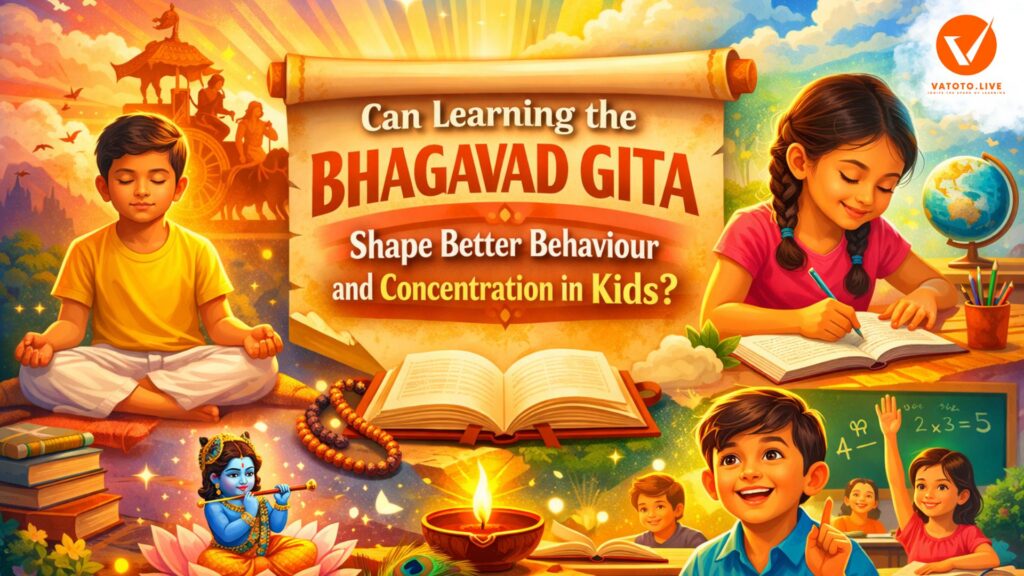
The Bhagavad Gita is not merely a religious scripture. It is a timeless guide to mental clarity, emotional balance, responsibility, and resilience. When presented in a structured, interactive, and age-appropriate format, its teachings become deeply practical for children growing up today.
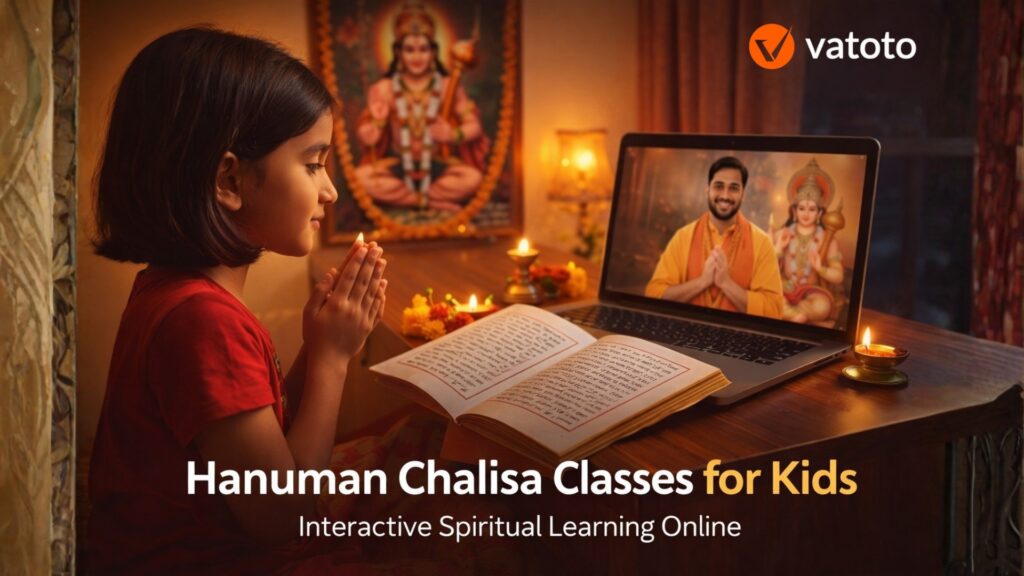
Through live online sessions, children can now explore these powerful lessons from anywhere — whether in India, the USA, the UK, Canada, Australia, or beyond.
Why the Bhagavad Gita Is More Relevant for Children Today Than Ever Before
At first glance, some parents assume the Gita is too complex for children. But if we look closely at its central message, it speaks directly to modern childhood struggles.
The Bhagavad Gita begins on a battlefield — not as a story of war, but as a story of emotional conflict.
Arjun stands confused, overwhelmed, and anxious. He questions himself. He doubts his strength. He fears the consequences of his actions.
This inner conflict is something children experience today in different forms:
- Fear of failure
- Pressure to perform
- Comparison with peers
- Emotional confusion
- Difficulty making decisions
The Gita does not remove life’s challenges. It teaches how to face them with clarity.
When children learn Gita principles in simple language, they begin to understand:
- Focus on effort, not just results
- Stay calm when things don’t go as planned
- Do the right thing even when it feels difficult
- Discipline builds strength
- Emotional reactions can cloud judgment
These lessons build emotional intelligence naturally.
That is why structured Bhagavad Gita lessons for children are not about preaching. They are about strengthening the mind.
What Children Actually Learn in Live Online Gita Classes
A high-quality online Gita program goes beyond memorizing shlokas.
It helps children internalize values.
1. How to Handle Fear and Performance Pressure
Many children fear disappointing parents or teachers. The Gita introduces a powerful mindset:
Your responsibility is effort — not the result.
When children absorb this idea, something changes. They try sincerely without being paralyzed by fear.
This reduces exam anxiety and builds courage.
2. How to Develop Focus in a Distracted World
Attention spans are shrinking.
Through structured Gita learning, children understand:
- Why consistency matters
- Why distractions weaken progress
- How small daily effort builds mastery
Over time, this improves study habits and self-discipline.
3. How to Make Ethical Decisions
Children face daily moral choices:
- Whether to tell the truth
- Whether to follow rules
- Whether to give in to peer pressure
The Gita teaches thoughtful decision-making.
Pause. Think. Choose what aligns with values.
This clarity strengthens character early.
4. Emotional Regulation and Self-Control
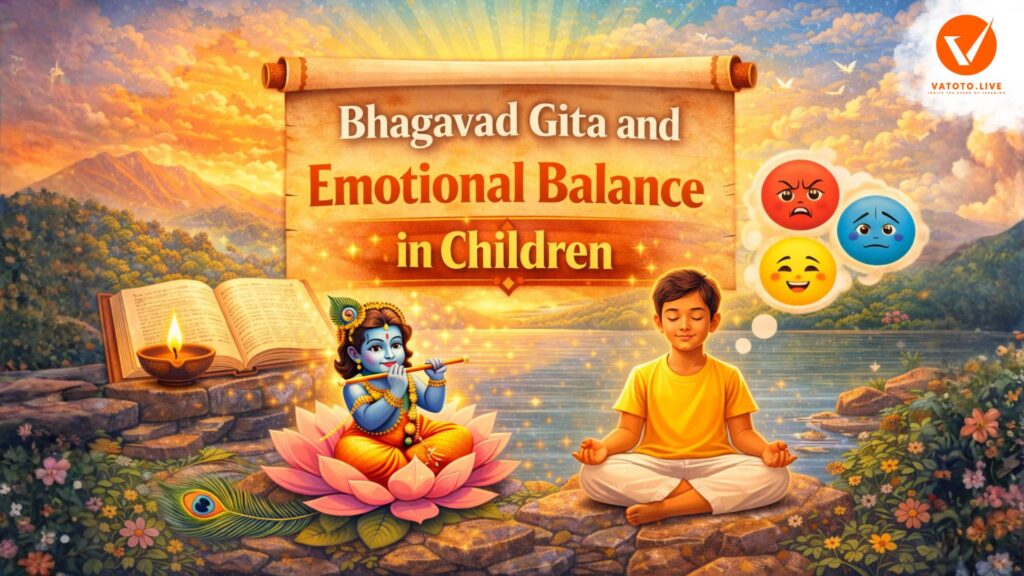
Anger, jealousy, comparison, and ego are natural emotions. The Gita does not deny them — it teaches how to manage them.
Children learn that:
- Anger reduces clarity
- Comparison weakens confidence
- Calm thinking improves outcomes
These emotional skills stay with them for life.
What Age Is Right to Start Bhagavad Gita Learning?
Parents often wonder whether their child is too young.
The truth is — the teaching approach matters more than the age.
When learning is interactive, story-based, and relatable, children can begin much earlier than expected.
Ages 4–6: Building Values Through Stories
At this stage, children learn best through imagination and repetition.
They explore:
• Simple stories from the Mahabharata
• Krishna and Arjun as relatable characters
• Easy shlokas with simple meanings
• Drawing, discussion, and storytelling
The goal is not philosophy.
It is value formation:
- Kindness
- Respect
- Listening skills
- Basic right and wrong
For this age group, Gita learning feels joyful, not heavy.
Ages 7–9: Understanding Responsibility and Effort
Children begin asking deeper questions.
They reflect on:
• Why Arjun felt confused
• Why Krishna encouraged calm thinking
• Why effort matters more than outcome
They start applying lessons to:
- School exams
- Friendships
- Competition
- Following rules
At this stage, interactive Gita classes online begin strengthening emotional maturity.
Ages 10+: Building Confidence, Leadership & Identity
Pre-teens face intense comparison and academic pressure.
They begin exploring:
• Detachment from unhealthy comparison
• Emotional balance
• Ethical leadership
• Handling self-doubt
• Managing fear of failure
For this age group, structured online Bhagavad Gita classes for kids serve as:
- A moral compass
- A mental clarity framework
- A foundation for confident identity
This stage benefits deeply from guided discussion rather than memorization.
Why Online Bhagavad Gita Classes Work So Well Today
Modern families prefer structured virtual learning for several reasons.
1. Global Accessibility
Children can attend live sessions regardless of geography.
For NRI families especially, this ensures cultural continuity.
2. Structured Curriculum
A step-by-step syllabus builds progressive understanding rather than scattered knowledge.
Consistency creates impact.
3. Interactive Engagement
Live sessions include:
- Question-answer discussions
- Real-life application examples
- Reflection exercises
- Value-based storytelling
Children actively participate rather than passively listen.
4. Meaningful Digital Use
Instead of unstructured screen time, children use technology for purposeful learning.
Virtual Gita sessions transform digital platforms into growth tools.
Long-Term Character Development
Information fades. Character remains.
The Bhagavad Gita cultivates:
Inner Confidence
Children stop depending solely on praise. They build internal strength.
Discipline
They learn that consistent action matters more than bursts of motivation.
Gratitude & Respect
Stories cultivate humility and empathy naturally.
Calm Under Pressure
Instead of reacting emotionally, they learn to respond thoughtfully.
These qualities shape adulthood.
Why Modern Families Are Choosing This Path
Today’s parents are no longer satisfied with academic success alone.
They want:
• Emotional intelligence
• Value-based education
• Cultural grounding
• Structured character development
Marks may open doors.
Character determines direction.
Especially for global Indian families, structured Gita education helps children remain rooted while growing confidently in modern society.
Parents notice visible change when:
- Their child handles disappointment calmly
- Their child speaks respectfully
- Their child focuses on effort
- Their child shows empathy
These qualities are cultivated intentionally — not accidentally.
That is why enrollment in live Bhagavad Gita classes for kids continues to grow steadily worldwide.
Frequently Asked Questions
Is the Bhagavad Gita too complex for children?
Not when explained in simple, relatable language. Philosophy becomes practical life guidance.
Do children need to memorize Sanskrit shlokas?
Memorization helps memory development, but understanding meaning is far more important.
How often should children attend Gita sessions?
Weekly structured sessions are ideal. Consistency builds transformation.
Can Gita learning improve academic performance?
Yes. Increased focus, discipline, and emotional stability naturally improve study outcomes.
Are online classes as effective as in-person sessions?
When interactive and well-structured, live virtual classes are equally effective — and more accessible.
A Modern Approach to Ancient Wisdom
The Bhagavad Gita has guided leaders, thinkers, and visionaries for centuries.
Yet its strength lies in simplicity.
It teaches children to:
• Do their best
• Stay calm
• Think clearly
• Act responsibly
• Detach from unhealthy comparison
In a world obsessed with results, the Gita gently reminds:
“You are more than your marks.”
It reframes failure as learning.
Comparison as distraction.
Discipline as empowerment.
When children absorb these ideas early:
- They stop chasing constant validation
- They build resilience
- They embrace growth
- They develop self-mastery
This is what makes the Bhagavad Gita timeless.
Through structured and engaging online sessions, ancient wisdom meets modern teaching methods.
It bridges tradition and technology.
It transforms digital platforms into tools of character building.
And in today’s uncertain world, inner balance is the greatest advantage a child can have.
Because balanced children grow into confident adults.
Confident adults become responsible leaders.
And responsible leaders shape a better world.
Final Thoughts
Every parent hopes their child grows up:
Confident.
Calm.
Respectful.
Focused.
Emotionally strong.
The Bhagavad Gita naturally nurtures these qualities.
Through structured and interactive online Bhagavad Gita classes for kids, families can blend timeless wisdom with modern learning methods.
Because when wisdom is planted early, it becomes lifelong strength.